Interview answers do not need to be long to be strong. They need a clear point and a clear result.
This week, the focus is interview stories: star that doesn’t ramble. The goal is simple: help the right reader understand your value faster.
In interviews, strong candidates sometimes lose the room because they try to tell the whole history. A strong answer does not include every detail. It guides the listener from problem to action to result.
The problem to fix
The main problem is that candidates know they should use STAR but still give long answers that bury the result. When this happens, good experience can look average.
That is frustrating, especially when you know you can do the work. But the reader only sees what you make clear.
Your resume, profile, or message should not make the reader guess. It should guide them.
FREE STAR+M Interview Story Builder by HRBN
The better mindset
A strong interview story is like a movie trailer. It gives the point, the stakes, and the ending without showing every scene. Keep that picture in mind as you edit.
You are not trying to write more. You are trying to make the right details easier to find.
A good next step is to prepare three STAR+M stories before the interview. This gives your job search a clean starting point.

Why this helps your confidence
Clearer wording also helps you feel less scattered. You stop trying to explain everything at once. You start choosing the best proof for the role in front of you.
That matters because a job search can wear you down. A simple plan gives you something you can control.
Examples from different fields
This works across many careers. For example, a project coordinator recovering a delayed launch. That gives the reader a clearer signal.
Another example is a clinic supervisor fixing patient flow. That sounds stronger than a broad duty statement.
You could also use a sales associate handling a service failure. Or you might use a compliance analyst correcting audit gaps.
The field may change, but the rule stays the same. Show the skill. Show the scope. Show the result.
How to apply this today
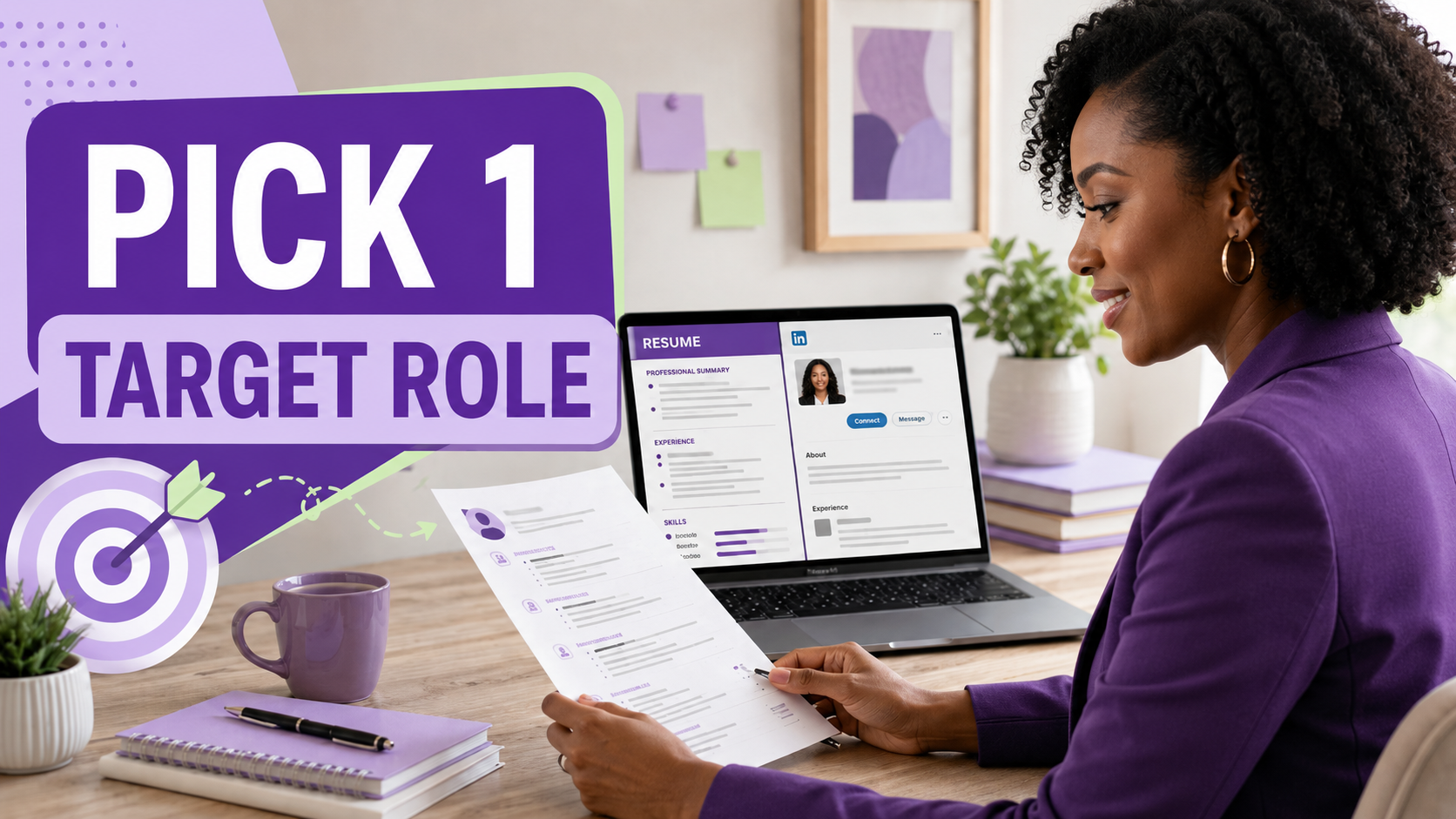
Pick one role you want. Do not start with five roles. Start with one.
Read the posting slowly. Look for the problems the employer wants solved.
Then choose proof from your own work. Keep it honest. Keep it simple. Keep it tied to the role.
A helpful formula is: I did this work, for this group, to improve this result.
For public-sector professionals
If you are moving from public sector to private sector, this step matters even more. public-sector stories can sound process-heavy unless the candidate translates challenge, stakes, and measurable outcome.
You do not need to hide your background. You need to translate it.
Think about the business value under the public-sector words. Did you manage risk? Serve people? Improve a process? Train a team? Track data? Handle a budget? Solve delays?
Those are private-sector signals. Use them clearly.
Common mistake to avoid
Do not copy language just because it sounds impressive. Use words that match real experience. If you cannot explain the proof behind the word, do not make that word the center of your message.
A reader can often tell when the wording is forced. Natural wording with proof is stronger.
A short checklist
Before you publish, apply, or send anything, ask these questions:
1. Is my target clear?
2. Is my proof clear?
3. Is my result clear?
4. Is my wording easy to understand?
5. Does this sound like the role I want next?
If the answer is no, revise one section. Do not try to fix everything at once.
What to leave out
Leave out words that sound good but do not prove anything. Words like hard-working, driven, passionate, and detail-oriented may be true, but they need proof.
Also leave out details that pull the reader away from your target. You do not need to show every task you have ever done. You need to show the work that supports the role you want now.
A simple rewrite habit
Try this habit once a week. Pick one sentence and make it clearer. Then pick one bullet and add proof. Then pick one message and make the ask simpler.
Small edits add up. Over time, your full job search message becomes sharper.
Final thought
You do not need to sound fancy to sound qualified. You need to sound clear, honest, and relevant.
This week, use STAR+M Interview Story Builder to organize your next step. You can also use HRBN Interview & Storytelling Lab for extra support.
Small edits can create a stronger first impression. Start with one section and make it clearer today.
Subscription CTA
Want practical job search tips each week? Subscribe to the HR by Nnamtique blog so you do not miss the next career strategy guide.